
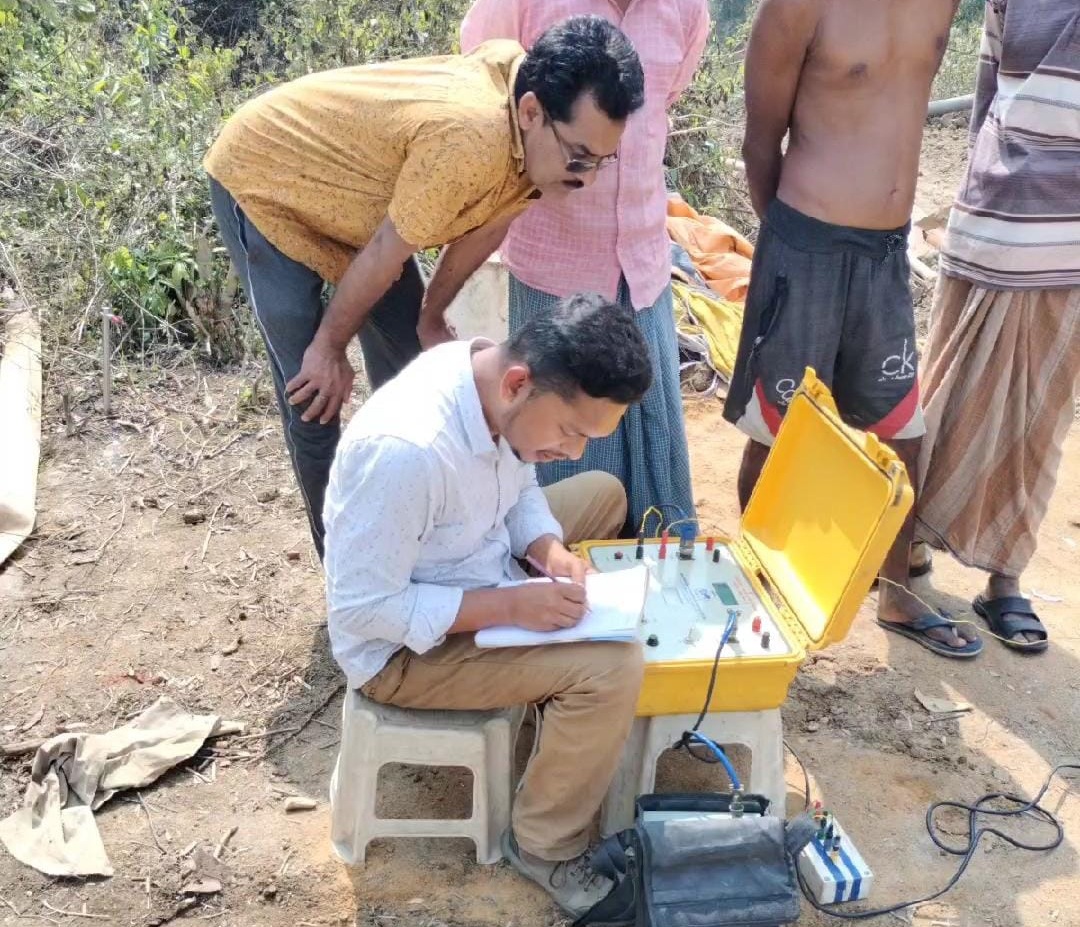
Electro Logging — Understanding What Lies Beneath Every Borehole
Meta description: Electro logging reveals the electrical properties of subsurface layers, helping engineers identify aquifers, clay zones, and formation boundaries. Learn how Earth Care Products & Service uses this essential borehole technique for smarter groundwater decisions.
When a borehole is drilled, the hole itself is only half the story. What really matters is understanding the layers of earth surrounding that hole — where the water-bearing zones are, where the clay and impermeable layers sit, and how deep a productive aquifer actually extends. This is exactly what Electro Logging is designed to reveal.
At Earth Care Products & Service, electro logging is one of our most frequently used subsurface investigation techniques, and it plays a foundational role in almost every groundwater project we undertake.
What Is Electro Logging?
Electro logging, also known as electrical resistivity logging, is a geophysical technique that measures the electrical resistivity and conductivity of subsurface formations by lowering a specialized probe down a borehole. As the probe descends, it records how easily electrical current passes through the rock, sediment, and fluid at each depth interval.
Different subsurface materials conduct electricity very differently:
- Clay layers tend to have low resistivity due to their fine particle structure and water retention
- Sand and gravel aquifers, especially those saturated with freshwater, typically show distinct resistivity signatures that differ from surrounding clays
- Saline or mineral-rich groundwater conducts electricity more readily than fresh water, showing up clearly on a resistivity log
- Compact rock formations generally show high resistivity due to lower porosity and fluid content
By recording these variations continuously from the top of the borehole to its full depth, electro logging produces a detailed vertical profile of the subsurface — essentially a map of what’s really down there.
Why Electro Logging Matters
1. Precise Aquifer Identification Rather than guessing where the water-bearing zones are, electro logging pinpoints them with data. This means well screens can be placed exactly where they’ll be most productive, rather than based on assumptions from nearby wells or surface geology alone.
2. Distinguishing Formation Types Electro logs help differentiate between clay, sand, gravel, and rock layers even when drill cuttings are ambiguous or when drilling through cased sections where visual inspection isn’t possible.
3. Water Quality Indicators Because saline water conducts electricity differently than fresh water, electro logging can offer early indications of water quality issues — such as saline intrusion — before a well is even completed and pump-tested.
4. Supporting Well Design Decisions The data from electro logging feeds directly into decisions about casing depth, screen placement, and gravel pack design — all of which determine how efficiently and sustainably a well will perform over its lifetime.
5. Complementing Other Logging Techniques Electro logging rarely works alone. It’s typically used alongside caliper logging (borehole diameter), gamma logging (lithology through casing), and other subsurface methods to build a complete, cross-verified picture of the formation.
How It Fits Into a Full Project
Electro logging is usually one part of a broader subsurface investigation. It often follows initial surface geophysical surveys (like ERT or VES surveys) that identify promising drilling locations, and it’s typically paired with other borehole logging techniques to validate and refine the initial findings once drilling is underway.
This layered approach — surface survey, followed by borehole logging, followed by informed well design — is what separates a well engineered on real data from one drilled on assumption.
Where This Applies
Electro logging is essential wherever groundwater extraction, geotechnical investigation, or environmental assessment depends on knowing exactly what’s beneath the surface — industrial tubewells, municipal water supply projects, geotechnical foundation studies, and environmental monitoring wells all benefit from this technique.
Our Experience
Earth Care Products & Service has carried out subsurface logging, including electro logging, for a wide range of industrial, infrastructure, and institutional clients — helping ensure that every well we’re involved with is designed on solid data, not guesswork.
If you’re planning a new tubewell, investigating an existing one, or need clarity on the subsurface conditions at your site, electro logging is often the single most valuable first step underground.
Contact us: ecpskol@gmail.com | 033 2576 8701 | 6290023645 / 9339638868


Leave a Reply